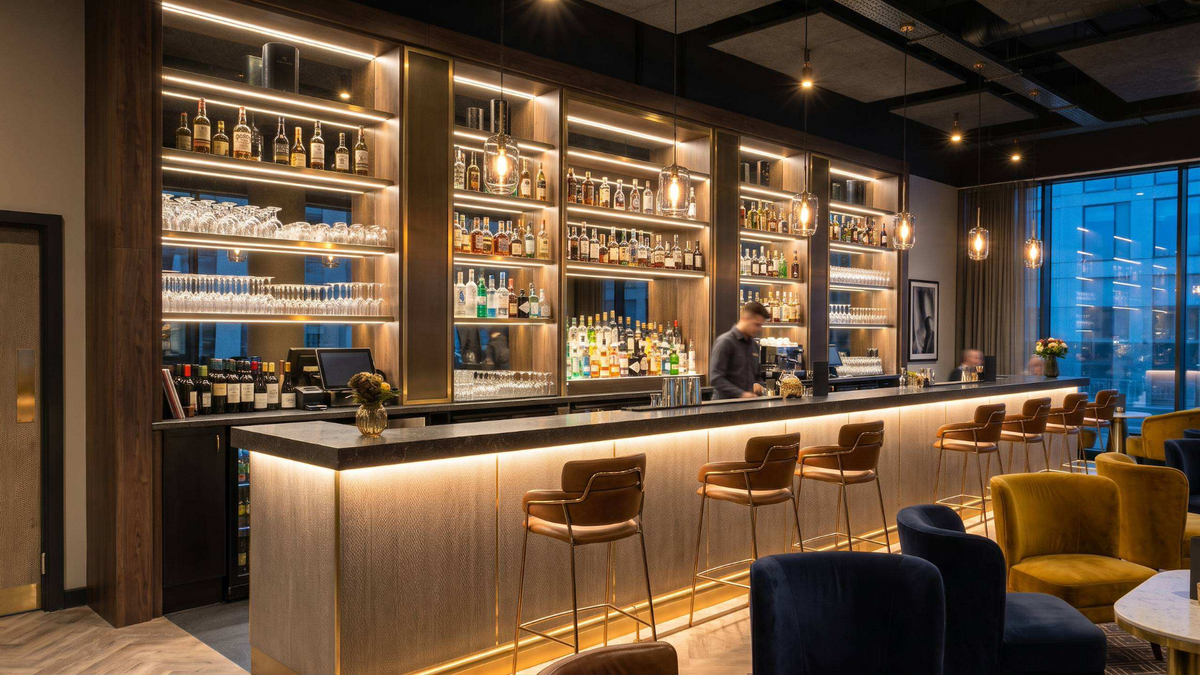

Hotel lighting often lets guests down because it’s planned too late, relies on one overhead light, uses confusing switches and lights mirrors from above. The fix is warm, layered lighting designed in from the start, with clearly labelled controls, illuminated mirrors and low-level night lighting.
Ask any frequent traveller about hotel lighting and you’ll probably hear the same complaints. The room is too dark to read. There are eight switches and none of them do what you expect. The bathroom mirror makes everyone look tired. And there’s always one light that won’t turn off.
It’s a surprisingly common frustration, and it matters. Lighting shapes the whole guest experience, and poor lighting can quietly undo the work of an otherwise beautiful hotel interior. The good news is that every one of these problems can be designed out, whether you’re planning a large hotel or choosing lighting for a boutique hotel.
Why hotel lighting goes wrong
1. It’s added too late. On many projects, lighting is treated as a final detail rather than part of the design. By the time it’s considered, the furniture is fixed and the options are limited.
2. One light tries to do everything. A single ceiling light or a pair of downlights can’t create mood, light a desk and help someone read in bed. Without layers, rooms end up either too bright or too dim.
3. The controls are confusing. Unlabelled switch panels, master switches that do half the room and lights controlled from the wrong side of the bed are among the most common guest complaints.
4. Bathroom mirrors light the face badly. A downlight directly overhead casts shadows under the eyes and chin. It’s practical in theory, and unflattering in practice.
5. Colours don’t match. Mixing fittings from different suppliers can leave a room with a patchwork of slightly different whites, which looks unfinished.
6. Value engineering cuts the wrong corners. Lower-cost fittings can fail early, flicker or drift in colour, leaving rooms out of action and maintenance teams busy.
How to fix it
Plan lighting from day one. Bring lighting into the conversation at concept stage, with a clear lighting plan agreed alongside furniture and joinery. That’s when integrated lighting, such as headboards, wardrobes and bedside units with built-in LED, can be designed in properly.
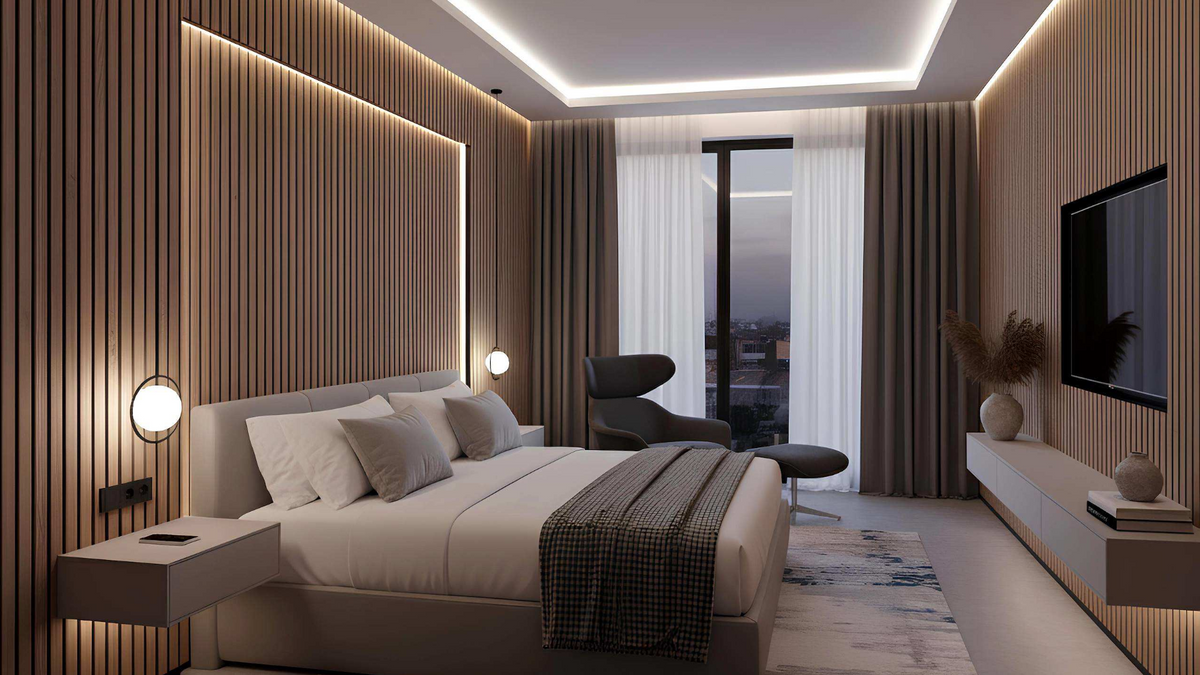
Build in layers. Combine task lighting for reading and getting ready, mood lighting to help guests unwind, and convenience lighting to help them find things and find their way. A lit headboard, a pair of reading lights and some under bed lighting will transform a room that once relied on a single ceiling fitting.
Make controls intuitive. Put a master switch by the door and by the bed. Use clear labels or simple scenes. Wireless controls can be placed exactly where guests need them, which is especially useful in refurbishments where chasing walls isn’t practical.
Light the face, not the top of the head. An illuminated mirror gives even, front-facing light that’s far more flattering. Add a demisting pad and guests won’t be wiping steam off the glass every morning.
Choose warm, consistent colour temperatures. Warm white, around 2700K to 3000K, feels homely and relaxed. Specify colour temperature carefully and source from one supplier where possible to keep every room consistent.
Think about the night. Low-level, sensor-activated lighting under the bed or vanity means guests never have to switch on the main lights at 3am.
Specify for the long run. Commercial-grade LED lighting with a strong guarantee costs less over its life than replacing cheaper fittings. Fewer failures mean fewer rooms out of action and less disruption for guests.
A quick checklist for guest room lighting
- Three layers: task, mood and convenience lighting
- Warm, consistent colour temperature across the room
- Individual reading lights on each side of the bed
- Master switch by the door and the bed
- Clearly labelled, intuitive controls
- Illuminated, demisting mirror in the bathroom
- Low-level night lighting
- Lit wardrobe that switches on as it opens
- Commercial-grade LED with a strong guarantee
For room-by-room ideas, read our guide on how to get guest room lighting right.
How Sensio helps get it right
For over 25 years, Sensio has designed LED lighting that’s built into furniture, not bolted on afterwards. We work with designers, architects and contractors from concept through to installation, so lighting is part of the plan from the start.
Our TrueFIT service delivers LED strip cut, soldered and assembled to your exact lengths, so every room is fitted consistently. Our bespoke illuminated mirrors can be made to any shape, size and colour temperature. And every product is backed by our 7-year guarantee.
Let’s talk at HIX Europe
We’re at HIX Europe, ExCeL London, from 25/11/2026 to 26/11/2026. Visit us on Stand E55 to see how thoughtful lighting transforms a guest room, and chat to our team about your next project.
Book a meeting with us at HIX, here.
FAQs
Why is hotel lighting so bad? Hotel lighting often lets guests down because it’s planned too late, relies on one overhead light, uses confusing controls and lights mirrors from above.
Why are hotel rooms so dark? Many hotel rooms rely on a few low-level fittings for atmosphere without enough task lighting for reading or working. Layered lighting solves this.
How do you improve guest room lighting? Add layers of light, use warm and consistent colour temperatures, make controls simple and add an illuminated mirror and low-level night lighting.
What are task, mood and convenience lighting in a hotel room? Task lighting covers reading lights, the desk and the mirror. Mood lighting includes headboard and cove lighting that help guests unwind. Convenience lighting lights the wardrobe and guides guests at night, for example with under bed lighting.
What colour temperature should hotel rooms be? Most hotel rooms use warm white, around 2700K to 3000K, for a calm, homely feel. It’s also the palette most hotel brands specify.
How do you choose lighting for a boutique hotel? Start with the feeling you want guests to have, then plan task, mood and convenience lighting room by room. Choose warm, dimmable LED, bespoke details that suit the interior, and a supplier who can support you from concept to completion.