
The best hotel lighting design layers task, mood and convenience lighting in every space, from the lobby to the guest room. Use warm white (2700K to 3000K) in relaxing areas, simple controls guests understand and commercial-grade LEDs that are energy-efficient, consistent across rooms and easy to build into furniture and joinery.
Guests rarely remember the specification of a hotel. They remember how it felt to walk into the lobby, unwind in the bar or switch off the lights at the end of a long day. Good hospitality lighting design shapes every one of those moments, often without anyone noticing it’s there.
In this guide for interior designers, architects and lighting specifiers working on hotel projects, we walk through each space in a hotel, from arrival to the guest room, with practical ideas for creating the right mood and the technical points that keep it working beautifully for years.
Why hotel lighting design matters
Lighting does three jobs in a hotel at once. It sets the atmosphere, it helps guests and staff find their way, and it highlights the architectural features and decor that owners have invested in.
Get it right and a space feels considered, calm and welcoming. Get it wrong and even the most beautiful interior can feel flat, harsh or confusing. That’s why lighting deserves a seat at the table from the first concept sketch, not as an afterthought once the furniture is chosen.
The most successful hotel lighting schemes use layered lighting, with three layers working together:
- Task lighting at the reception desk, bedside and vanity mirror helps guests check in, read, work and get ready.
- Mood lighting in ceiling coves, behind headboards and along bar fronts adds warmth and depth as the day winds down.
- Convenience lighting inside wardrobes, along corridors and under beds helps guests find what they need, and their way at night.
When these layers work together, and guests can adjust them easily, a space can shift from bright and lively to calm and intimate as the day goes on.
The lobby and reception: first impressions count
The lobby is where guests decide how they feel about a hotel, often within seconds. Lighting here should create a warm, inviting atmosphere, guiding people naturally towards reception without glare or harsh contrast.
Ideas to try:
- Cove lighting around ceilings and recesses adds a soft, indirect glow that makes high spaces feel warm rather than cavernous.
- Backlit reception desks create a natural focal point and are a hallmark of luxury hotel lighting. A flexible LED sheet like Pixel gives even, shadow-free light behind marble, onyx or other translucent surfaces.
- Mood lighting on feature walls and artwork adds depth and gives the space character.
Technical tip: for cove lighting, choose an LED strip with a high density of LEDs or a COB strip to avoid visible dots of light (often called “spotting”). Pairing the strip with an aluminium LED profile and diffuser gives a cleaner line and helps manage heat, which supports a longer lifespan.
Corridors and circulation: calm and clear
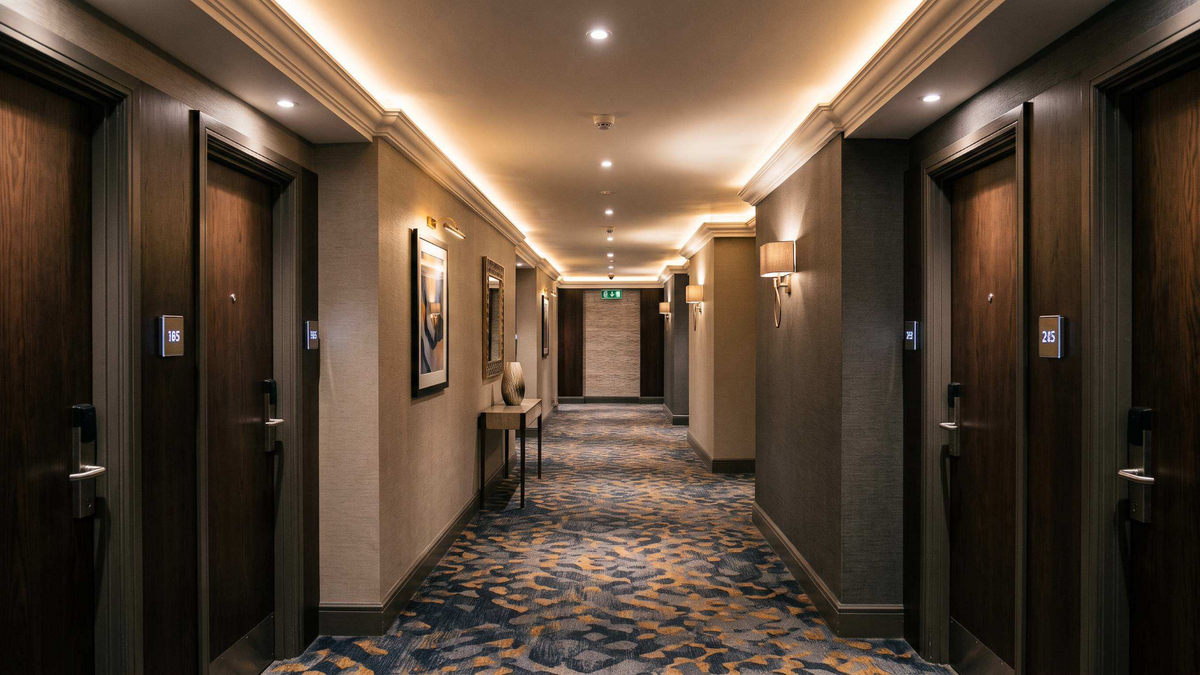
Corridors are often overlooked, but they’re part of every guest’s journey. Lighting here needs to feel calm while keeping pathways and common areas well lit, so room numbers, signage and changes in level are easy to see.
- Low-level or skirting lighting guides guests gently at night without waking them up fully.
- Wall lights at regular intervals create rhythm and break up long, uniform spaces.
- Sensors and lighting controls can dim corridors when they’re empty, cutting energy use without leaving guests in the dark.
Restaurants and bars: from breakfast to last orders
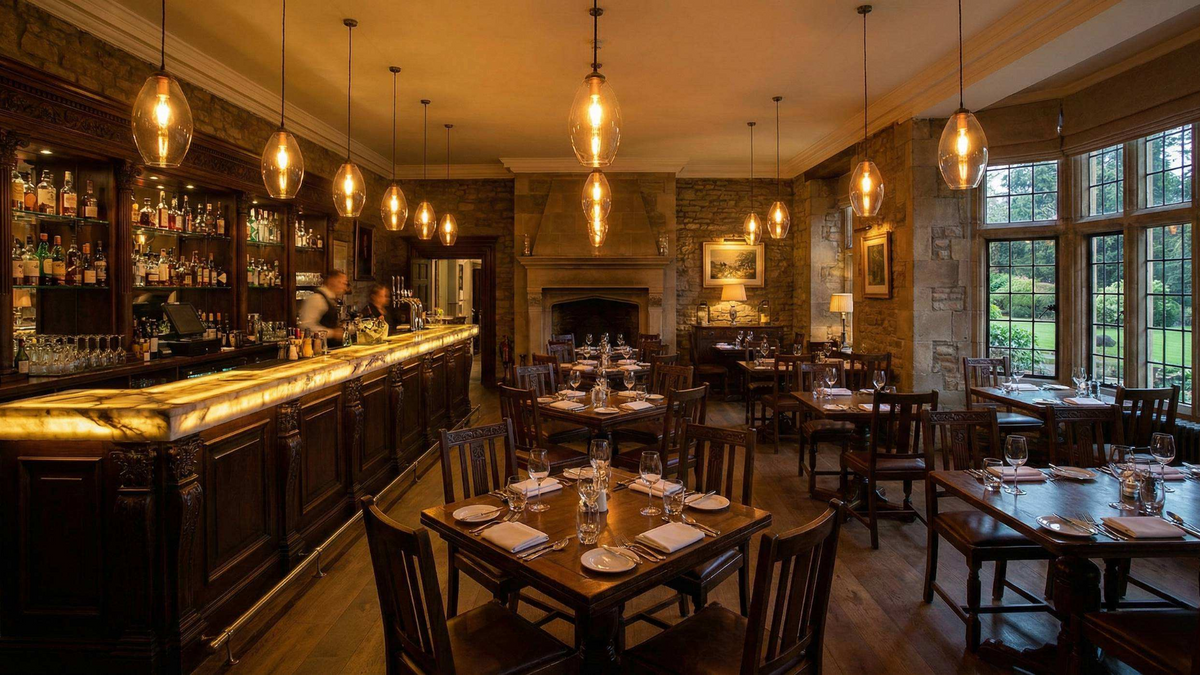
Food and drink spaces change character throughout the day, from bright breakfasts to intimate evening dining. Your lighting needs to change with them.
- Use dimmable LED lighting so the mood can shift from day to night.
- Light the bar front and back bar shelving with LED strip and profiles to create a glowing focal point.
- Keep light on the table warm and flattering. Guests want to see their food and each other, not feel like they’re in a spotlight.
We go into more detail in our guide to restaurant and bar lighting ideas.
Guest bedrooms: a home-from-home feeling
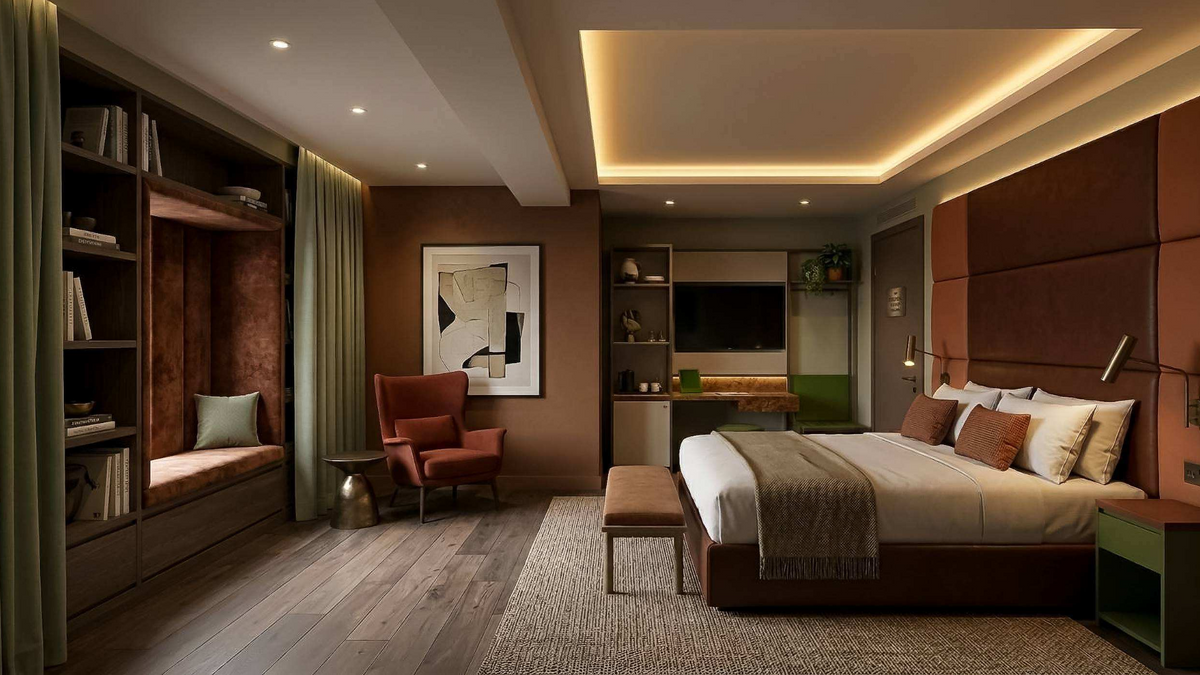
The guest room is where lighting matters most, and where it most often goes wrong. Guests want to feel at home, and that means lighting they can understand and control without hunting for switches.
- Headboard lighting adds a soft glow that makes the room feel calm and inviting.
- Under bed lighting gives a gentle night light, so guests can find their way without switching on the main lights.
- Wardrobe lighting that switches on automatically when the door opens is a small detail guests notice and appreciate.
- Reading lights at the bedside should be directional and individually controlled, so one guest can read while the other sleeps.
Read more in our guide on how to get guest room lighting right.
Hotel bathrooms: practical and flattering
Bathrooms need lighting that’s both practical and kind. Guests want to see clearly for shaving or make-up, but they also want to relax.
- An illuminated bathroom mirror gives even, shadow-free light on the face, which is far more flattering than a single downlight overhead.
- Demisting pads keep mirrors clear after a hot shower.
- Soft, low-level lighting makes late-night visits less of a shock to the system.
Technical tip: every fitting in a bathroom must suit its zone, so always check the IP rating. Our hotel bathroom lighting guide explains bathroom zones and IP ratings in full.
Spa and wellness spaces
Spa lighting should feel restorative, never clinical. Think warm, indirect light, gentle dimming and hidden light sources that glow rather than glare. Paired with natural materials and planting, it supports a biophilic lighting design that helps guests feel connected to nature. Because many spa spaces involve water and humidity, check IP ratings carefully for every fitting.
Warm white vs cool white: choosing the right colour temperature
Colour temperature, measured in kelvin (K), has a big effect on how a space feels:
- Warm white (around 2700K to 3000K) feels cosy and relaxed, ideal for bedrooms, bars and restaurants.
- Natural white (around 4000K) feels clean and clear, useful for back-of-house and task areas.
- Tunable or CCT-adjustable lighting lets one fitting shift between warm and cool, so a space can follow natural rhythms through the day, an approach often called circadian lighting.
Consistency matters too. Mixing slightly different whites across a space can make an interior look patchy, so specify colour temperature carefully and source from one supplier where possible.
Commercial LED lighting: built for hospitality
Hotels run their lighting for long hours, every day of the year. Commercial LED lighting is the natural choice: it uses far less energy than older technologies, lasts longer and runs cooler, which cuts running costs, maintenance and environmental impact.
When it comes to commercial lighting specification, look for:
- Reliable, consistent products that look the same across hundreds of rooms
- Low-voltage option (24V) for integrating light safely into furniture and joinery
- Simple installation, so fit-out teams can work quickly and accurately on site
- A strong guarantee that gives owners confidence long after handover
How Sensio can help
For over 25 years, Sensio has been designing LED lighting that fits seamlessly into furniture, joinery and interiors. Our in-house UK design team holds 18 patents and 124 design rights, and our lighting features in hotel spaces across Hilton, Marriott, IHG and Radisson. For hospitality projects, we offer:
- TrueFIT, our bespoke order service. We cut, solder and assemble your LED strip lighting to your exact lengths before it leaves our facility, so every piece arrives ready to fit.
- Bespoke illuminated mirrors in any size or shape, IP44 rated, with a demister that switches on with the light.
- Slim, discreet LED strips and profiles, like Razor X, the thinnest edge-lit COB strip on the market at just 2mm, and Flex, a push-fit flexible profile made for acoustic panelling.
- A 7-year guarantee on all products, so you can trust your lighting long after the snagging list is done.
We work with interior designers, architects, specifiers and contractors from concept to completion, creating customised lighting solutions for hotels, serviced apartments, aparthotels and holiday lodges. Whatever the project, we’ll help bring your vision to life exactly as you imagined it.
See it for yourself at HIX Europe
This year’s HIX Europe theme is ‘Changes’, and for Sensio it marks a new chapter in hospitality. We’re exhibiting at ExCeL London from 25/11/2026 to 26/11/2026. Visit us on Stand E55 to see our latest hospitality lighting in person, including our collaborations with Naomi Paul Studio and Nuflow. Want to chat to the Sensio team at HIX about your project? Request a chat here.
FAQs
What is the best lighting for a hotel? The best hotel lighting uses three layers, task, mood and convenience lighting, with warm colour temperatures in relaxing spaces and simple controls so guests can adjust the mood.
What colour temperature should hotel rooms be? Most hotel guest rooms use warm white, around 2700K to 3000K, to create a calm, homely feel. Bathrooms and task areas may use slightly cooler light.
What is cove lighting? Cove lighting is indirect lighting hidden in a recess, ledge or ceiling cove. It bounces light off the ceiling or wall to create a soft, even glow.
What are the most energy-efficient lighting solutions for hotels? LED lighting uses less energy, lasts longer and needs less maintenance than older lighting, which matters in hotels where lights run for long hours every day.
What are task, mood and convenience lighting? Task lighting helps people do things, like reading or checking in. Mood lighting sets the atmosphere, from cove lighting to a lit headboard. Convenience lighting helps guests find things and find their way, in wardrobes, corridors and under beds.
How can lighting improve the look and feel of a hotel? Layered lighting reveals textures, highlights architectural features and decor, and creates a warm, inviting atmosphere. It also makes spaces easier to use, with clear task lighting and well-lit pathways.